How to Choose Between Wheel Brake and Total Lock Brake Casters
Caster Brake Guide
Wheel Brake vs Total Lock Brake: What Is the Difference?
When choosing industrial casters, many buyers simply ask for casters with brakes. However, wheel brakes and total lock brakes work in different ways. Understanding the difference helps improve equipment safety, stability, and daily operating efficiency.
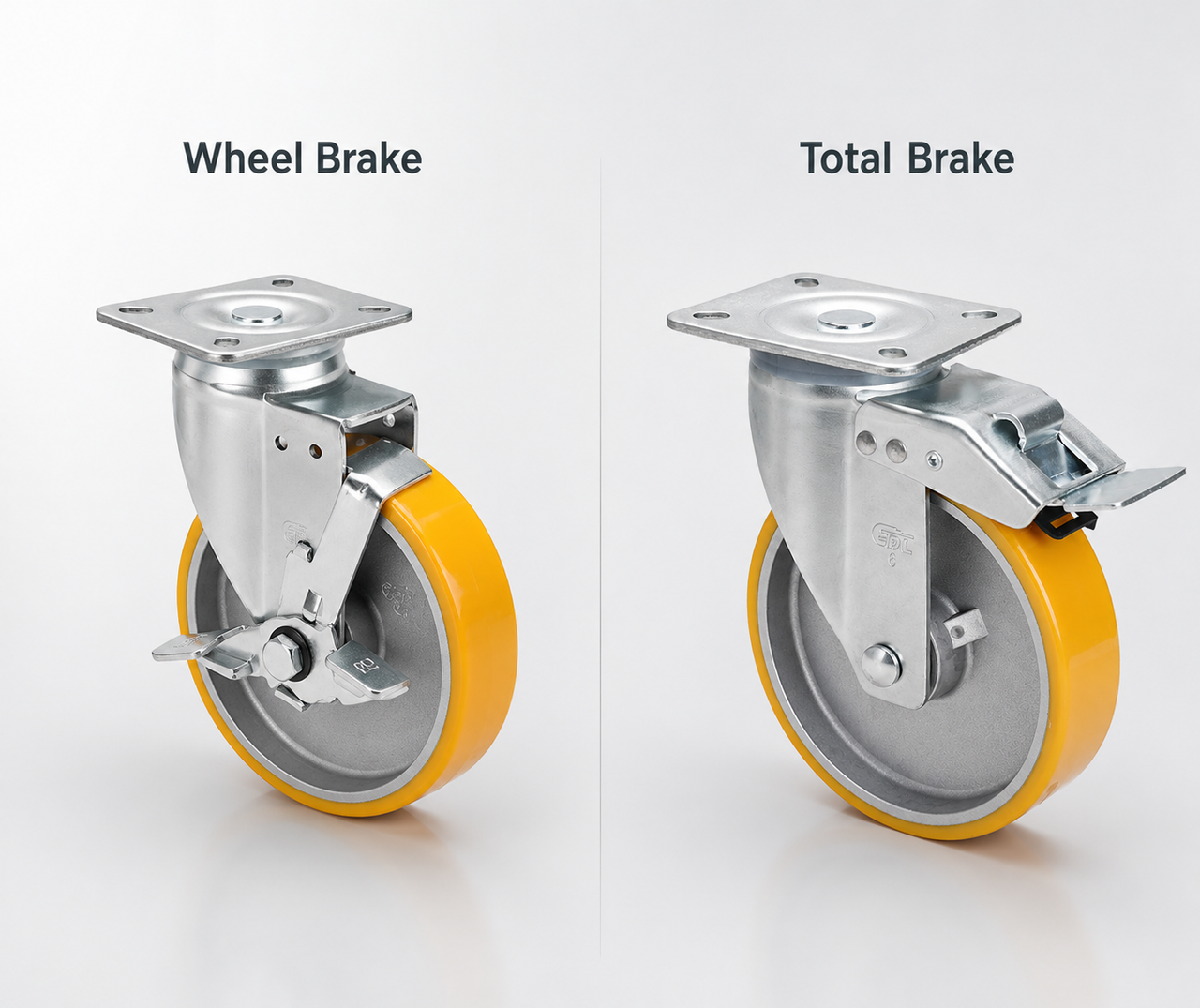
Wheel Brake
Locks wheel rotation only.
Total Lock Brake
Locks wheel and swivel together.
Application Guide
Choose the right brake for your equipment.
01
What Is a Wheel Brake?
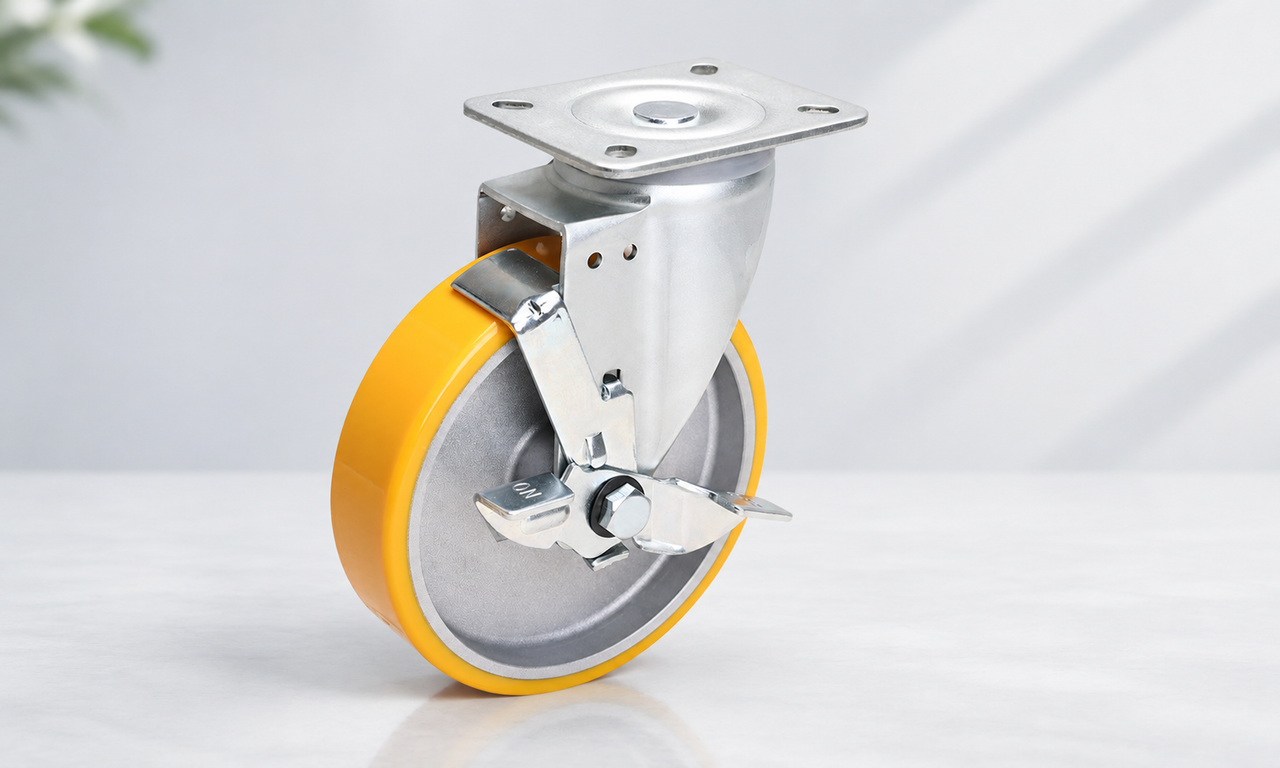
A wheel brake is one of the most common brake systems used on industrial casters.
When the brake pedal is pressed, the wheel can no longer roll forward or backward. However, the swivel section of the caster can still rotate.
In simple terms, a wheel brake locks only the wheel. It prevents rolling movement, but it does not lock the caster's swivel mechanism.
How It Works
The brake mechanism presses against the wheel tread and stops the wheel from rotating. Since the swivel bearing remains active, the caster can still turn left or right after the brake is engaged.
Wheel brakes are commonly used on utility carts, tool carts, service trolleys, warehouse carts, display racks, and mobile shelving systems.
02
What Is a Total Lock Brake?
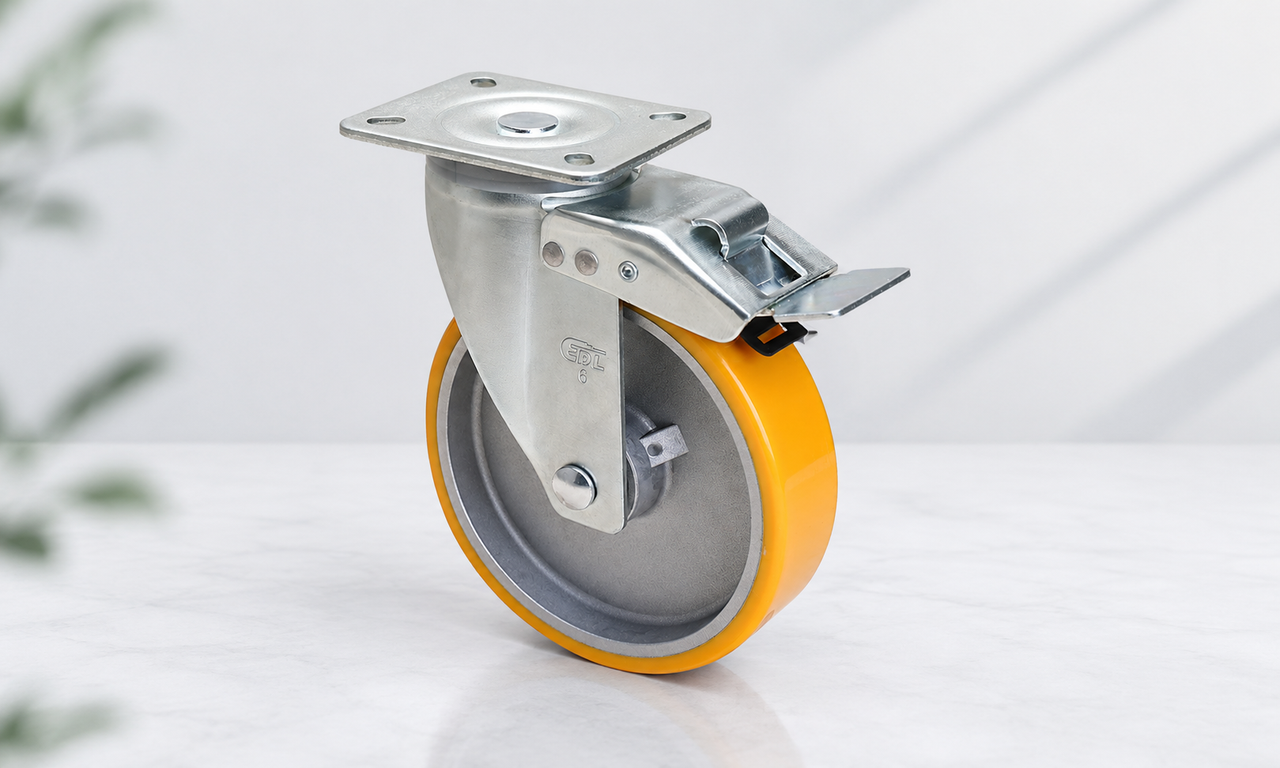
A total lock brake is a more complete braking system. It locks both the wheel and the swivel mechanism at the same time.
Once the total lock brake is engaged, the wheel cannot rotate and the caster cannot swivel. The caster becomes a fixed support point under the equipment.
Unlike a wheel brake, a total lock brake prevents movement from different directions. It not only stops rolling movement, but also prevents the caster from turning around the swivel axis.
Why It Matters
This is especially important when equipment must remain in a fixed position during operation. Total lock brakes provide higher equipment stability, improved safety, better positioning accuracy, and reduced movement caused by vibration.
Why Wheel Brakes Are Not Always Enough
A wheel brake stops the wheel from rolling, but it does not completely fix the caster. In some working conditions, the equipment may still move or lose stability.
Position Drift
If equipment is pushed from the side, the caster may rotate around the swivel axis. Even though the wheel cannot roll, the equipment may still shift slightly from its original position.
Vibration Movement
Some machines generate continuous vibration during operation. Over time, this vibration may cause the swivel section to move gradually, which can lead to equipment displacement.
Reduced Stability
For heavy equipment or machines with a high center of gravity, uncontrolled swivel movement can reduce overall stability. In these conditions, total lock brakes usually provide better control.
EDL Recommendation
The brake system should be selected based on the actual working environment rather than price alone.
For carts, trolleys, warehouse equipment, and general mobile equipment, wheel brakes are usually sufficient because the main goal is simply to prevent rolling.
For industrial machinery, medical equipment, laboratory devices, food processing equipment, and precision workstations, total lock brakes usually provide better stability and safety.
A simple rule is: if the main goal is to prevent rolling, a wheel brake is often enough. If the equipment must remain completely stationary, a total lock brake is usually the better choice.
If you are unsure which brake system is right for your application, EDL can recommend the most suitable caster solution based on equipment weight, operating conditions, floor environment, and mobility requirements.
Frequently Asked Questions
What is the difference?
A wheel brake locks only the wheel, while a total lock brake locks both the wheel and the swivel mechanism.
Does wheel brake stop swivel?
No. A wheel brake prevents rolling movement, but the caster can still swivel.
Which is better for equipment?
If equipment must stay fixed during operation, total lock brakes are generally recommended.
Is total lock more expensive?
Yes. Total lock brakes usually cost more because the locking structure is more complex.
Looking for the Right Caster Brake?
Contact EDL Casters for wheel brake casters, total lock casters, industrial casters, heavy-duty casters, stainless steel casters, and custom caster solutions.