What Bearing Is Inside Your Caster Wheel
Caster Bearing Guide
What Bearing Is Inside Your Caster Wheel?
Wheel material and load capacity are important, but the bearing inside the wheel also affects rolling performance, noise level, service life, and the overall moving experience.
Smooth Rolling
Lower rolling resistance for easier movement.
Lower Noise
Better bearing choice can improve quiet operation.
Longer Service Life
Proper structure helps improve durability.
Why Caster Bearings Matter
When customers choose caster wheels, they often focus on wheel diameter, wheel material, and load capacity. These factors are important, but they do not tell the full story of how a caster performs in daily use.
The bearing is hidden inside the wheel, yet it directly affects pushing force, operating noise, rolling stability, and service life. Two caster wheels may look almost the same from the outside, but feel completely different once installed on equipment.
Common Bearing Structures Used by EDL
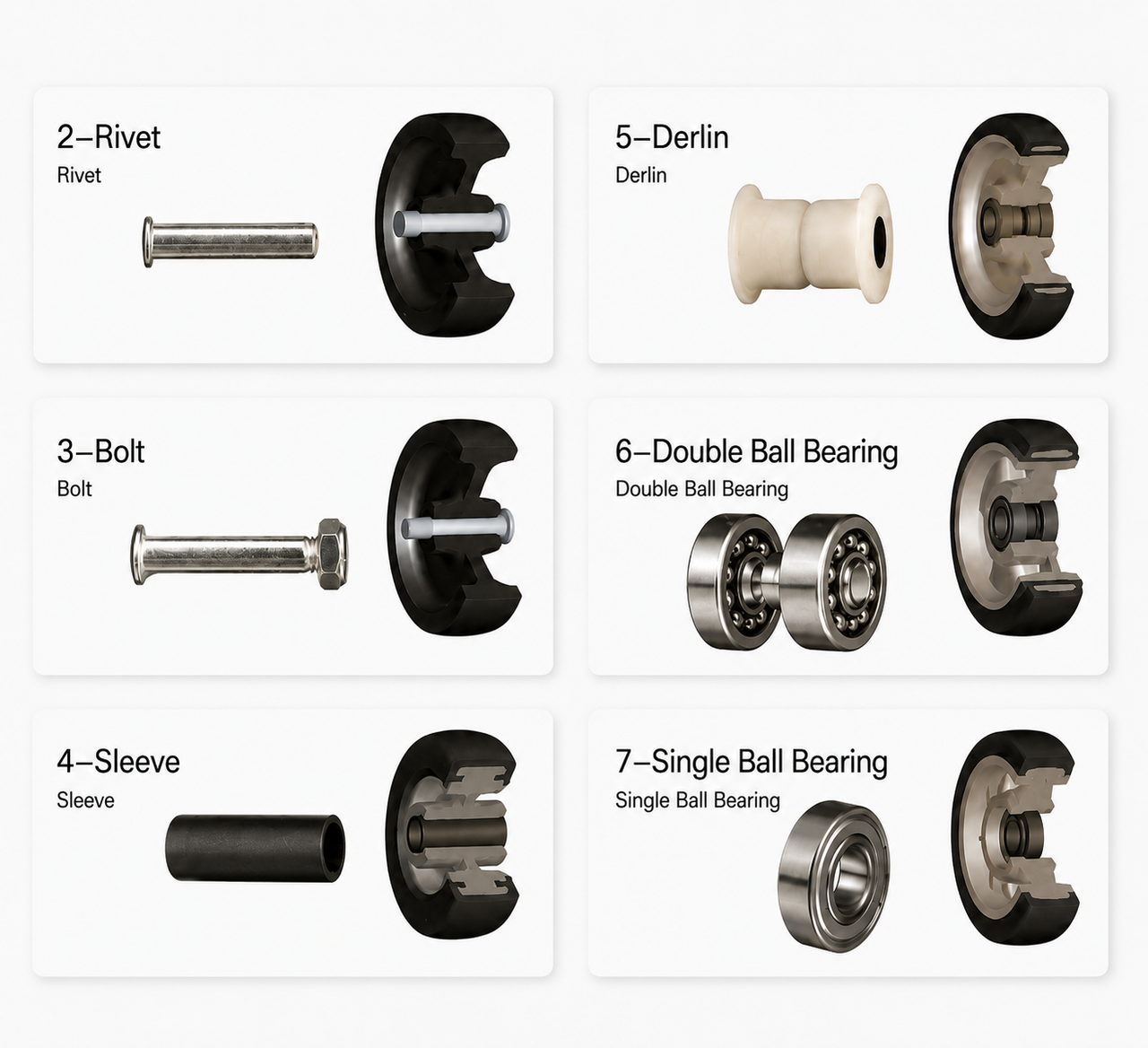
Different equipment requires different caster configurations. To match various working conditions, EDL mainly uses the following six bearing and axle structures in our caster wheel products.
Rivet
Rivet structure is simple, economical, and suitable for light-duty applications where movement frequency is low, such as furniture, display racks, and small equipment.
Bolt
Bolt structure is also a basic axle solution, but it allows easier disassembly and replacement. It is often used when maintenance convenience is required.
Sleeve Bearing
Sleeve bearing is a practical choice for general industrial use. It offers stable performance, simple maintenance, and reliable operation for carts and warehouse equipment.
Derlin Bearing
Derlin bearing is a maintenance-free engineering plastic bearing. It is quiet, corrosion-resistant, and suitable for medical, food processing, and humid environments.
Single Ball Bearing
Single ball bearing helps reduce rolling resistance and makes the wheel move more smoothly. It is widely used in industrial carts, tool trolleys, and equipment casters.
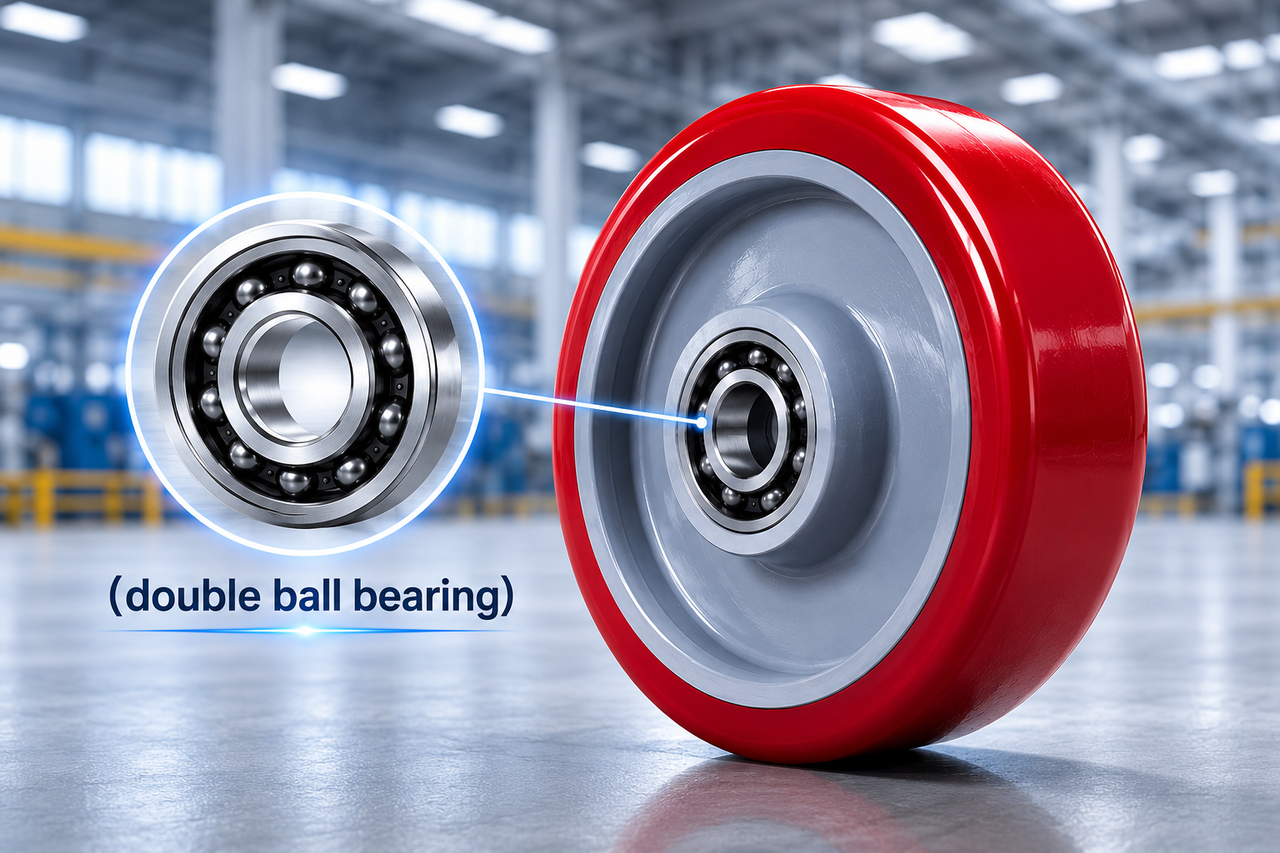
Double Ball Bearing
Double ball bearing provides smoother rolling, lower starting resistance, and better durability. It is suitable for high-frequency movement and applications requiring better user experience.
01
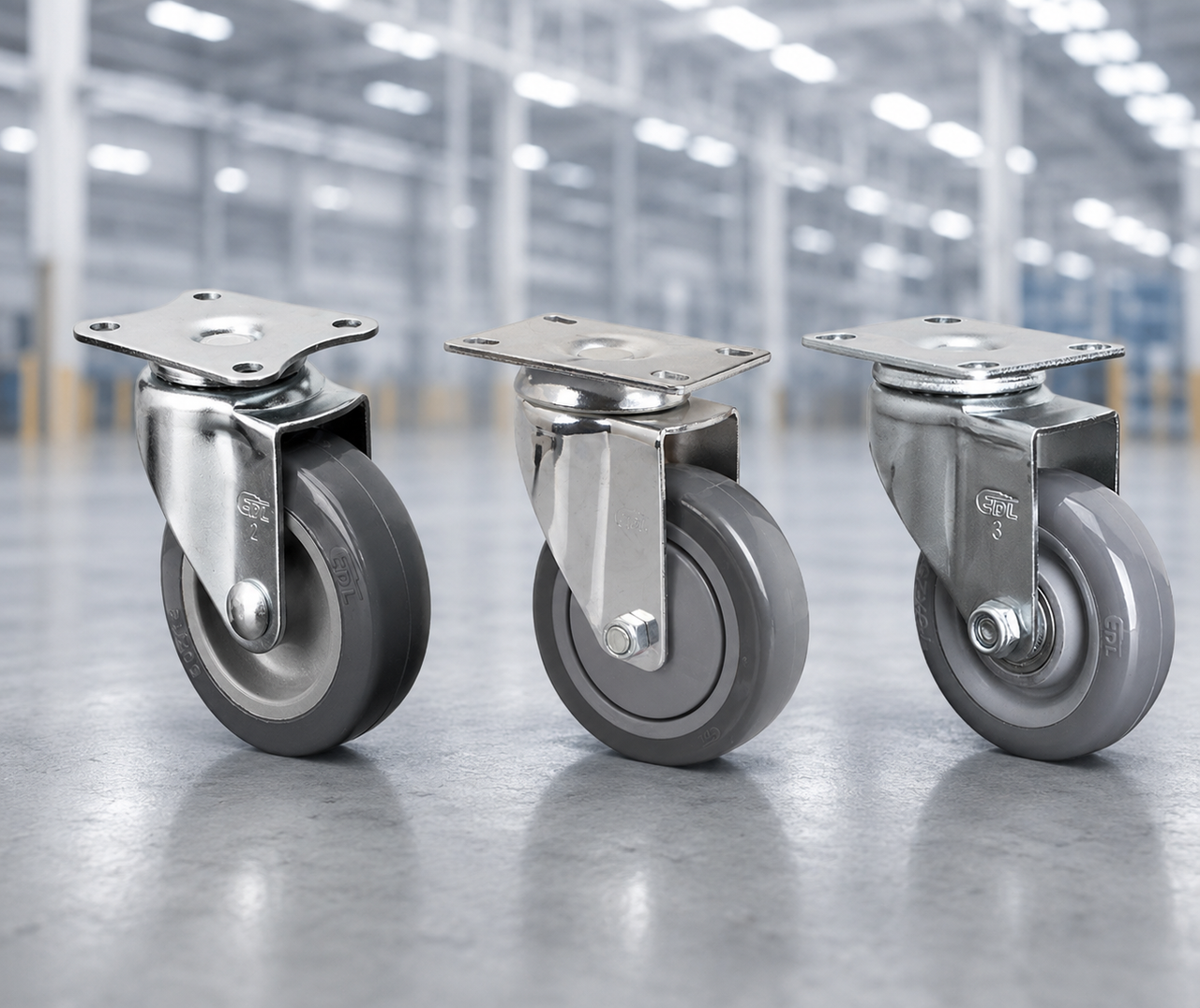
Similar Wheels Can Feel Very Different
From the outside, many caster wheels look very similar. They may have the same wheel diameter, the same wheel width, and even the same wheel material. But once they are installed on equipment and used every day, the difference may become obvious.
A wheel with a basic axle structure may be enough for light-duty or low-frequency movement. But for equipment that moves many times a day, rolling resistance and noise become much more important.
This is why we do not recommend choosing casters based only on appearance or load capacity. The real working condition should always be considered.
02
When a Bearing Upgrade Solved the Problem
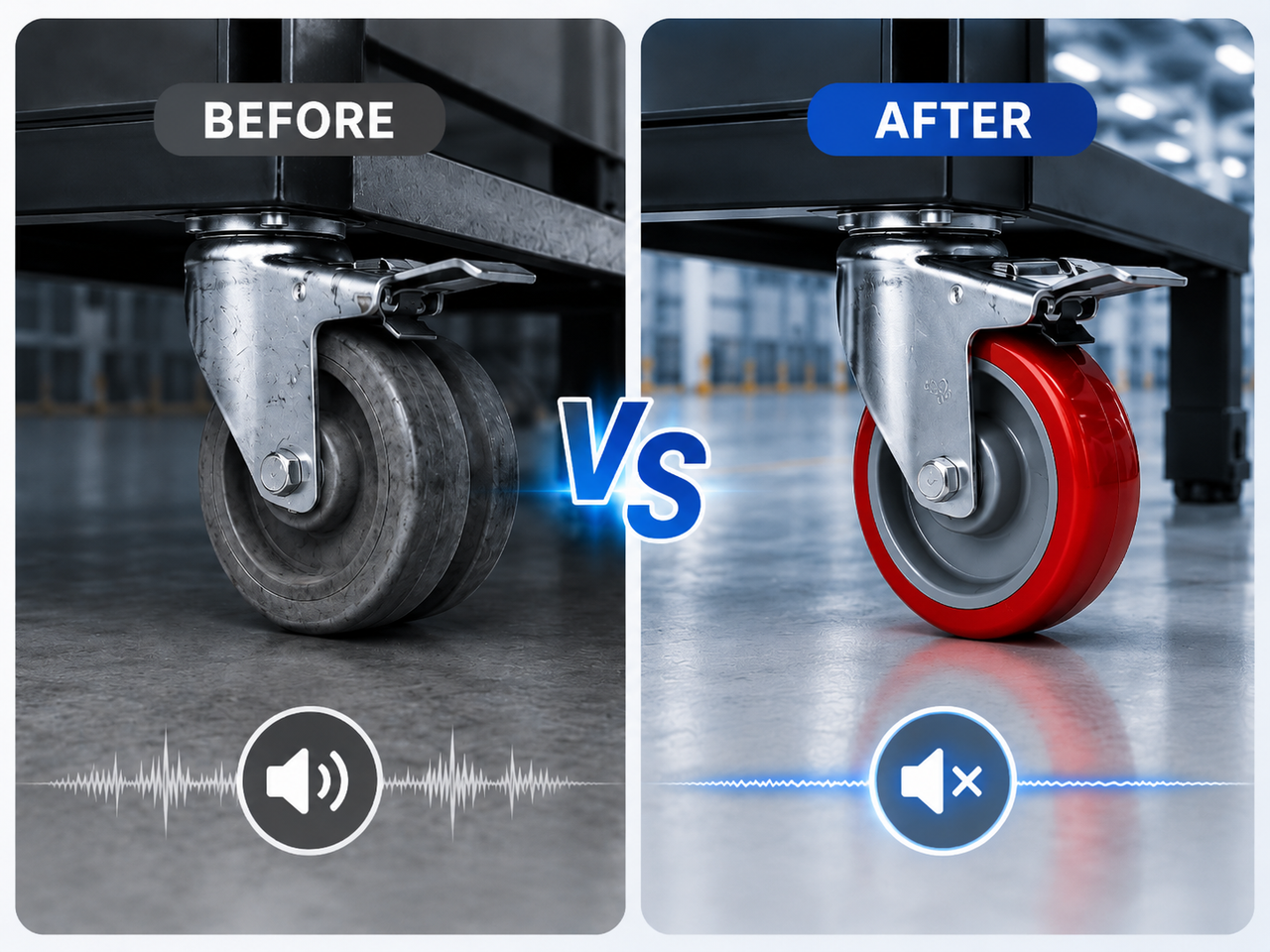
A customer once contacted us because their equipment casters produced too much noise during movement. The original wheels were not overloaded, but the equipment moved frequently every day, and operators felt the wheels were noisy and not smooth enough.
After checking the application, we found that the original wheels used a sleeve bearing structure. Sleeve bearings can work well in general conditions, but this customer needed a quieter and smoother moving experience.
We recommended caster wheels with double ball precision bearings for testing.
“This is exactly the feeling we were looking for.”
After receiving the samples, the customer quickly confirmed the improvement. The new casters started more easily, rolled more smoothly, and produced less noise during operation.
03
There Is No Single Best Bearing
Double ball bearing is not always the best choice. For light-duty equipment, a simple rivet or bolt structure may already be enough.
For general warehouse carts and industrial equipment, sleeve bearing can provide a good balance between cost and performance. For humid or clean environments, Derlin bearing is often more suitable because it is quiet, corrosion-resistant, and maintenance-free.
For equipment that moves frequently or requires smoother operation, single ball bearing or double ball bearing becomes a better option. The right choice depends on load, movement frequency, floor condition, noise requirement, and budget.
Choose the Bearing Based on Real Use
Wheel material determines how the caster contacts the floor, while the bearing determines how the wheel rotates. Both factors affect caster performance, but bearing selection is often ignored because it is not visible from the outside.
In many applications, a suitable bearing structure can help reduce pushing force, lower operating noise, and improve service life. This is especially important for equipment that moves frequently or operates in environments where noise and maintenance are major concerns.
When comparing two similar caster wheels, it is worth asking one more question: what bearing structure is used inside the wheel?
Looking for the Right Bearing Solution?
Contact EDL and our team can help recommend the most suitable caster configuration based on your load, environment, movement frequency, and noise requirements.