Why Do Caster Wheels Crack?
Caster Wheel Guide
Why Do Caster Wheels Crack?
When cracks suddenly appear on a caster wheel, the problem may come from the product itself, but it may also be caused by overload, long storage time, natural aging, or an unsuitable working environment.
The key is not only to replace the damaged wheel, but also to understand why it cracked, so the same problem does not happen again.
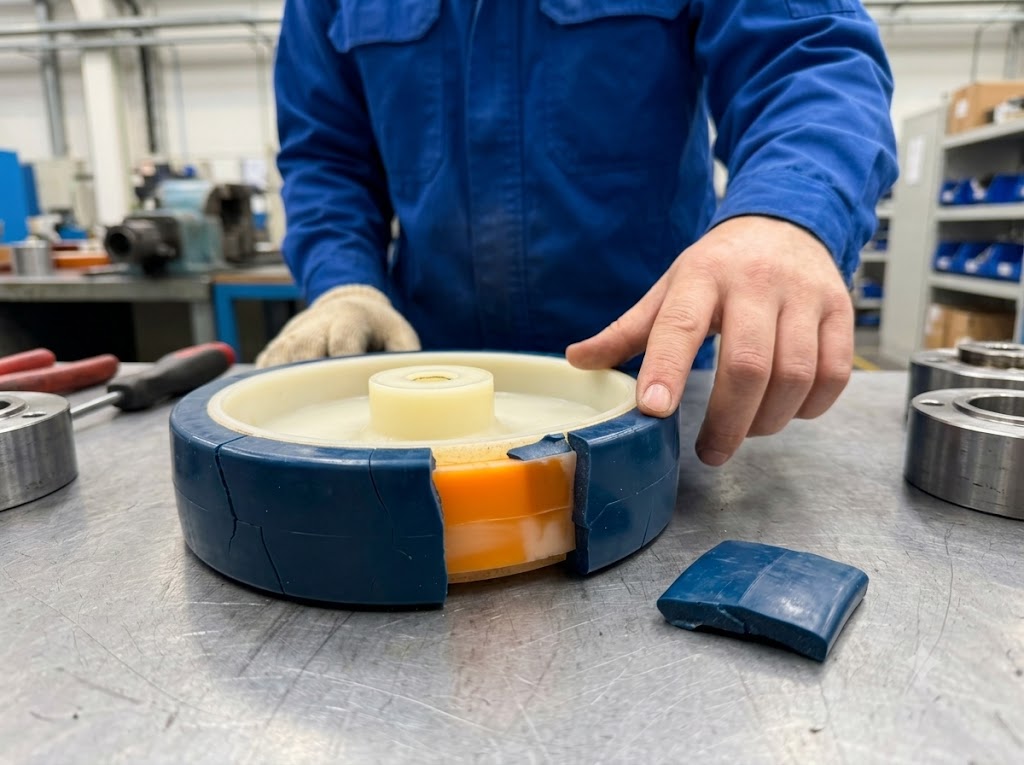
Stop Using Cracked Wheels Immediately
If visible cracks appear on the wheel surface, the safest choice is to stop using the caster and replace the wheel in time.
A cracked wheel may still move for a short period, but its structure has already been weakened. When the equipment continues to carry load, turn, pass over floor joints, or receive impact, the cracks may grow quickly.
In serious cases, the wheel may lose chunks, deform, or fail completely. This can make the equipment unstable and may also damage other parts of the cart or machine.
For factory carts, logistics trolleys, equipment casters, and heavy-duty applications, cracked wheels should not be ignored.
Common Causes of Wheel Cracking
1
Overload
During movement, turning, crossing thresholds, or passing over uneven ground, one wheel may suddenly carry much more force than expected.
2
Poor Tread Material
Low-quality PU or rubber tread material may harden, crack, powder, or break earlier during use.
3
Long Storage Time
PU and rubber materials can naturally age during storage, especially in hot, humid, or poorly ventilated environments.
4
Harsh Conditions
High temperature, oil, chemicals, rough floors, sharp debris, and repeated impact can all increase the risk of cracking.
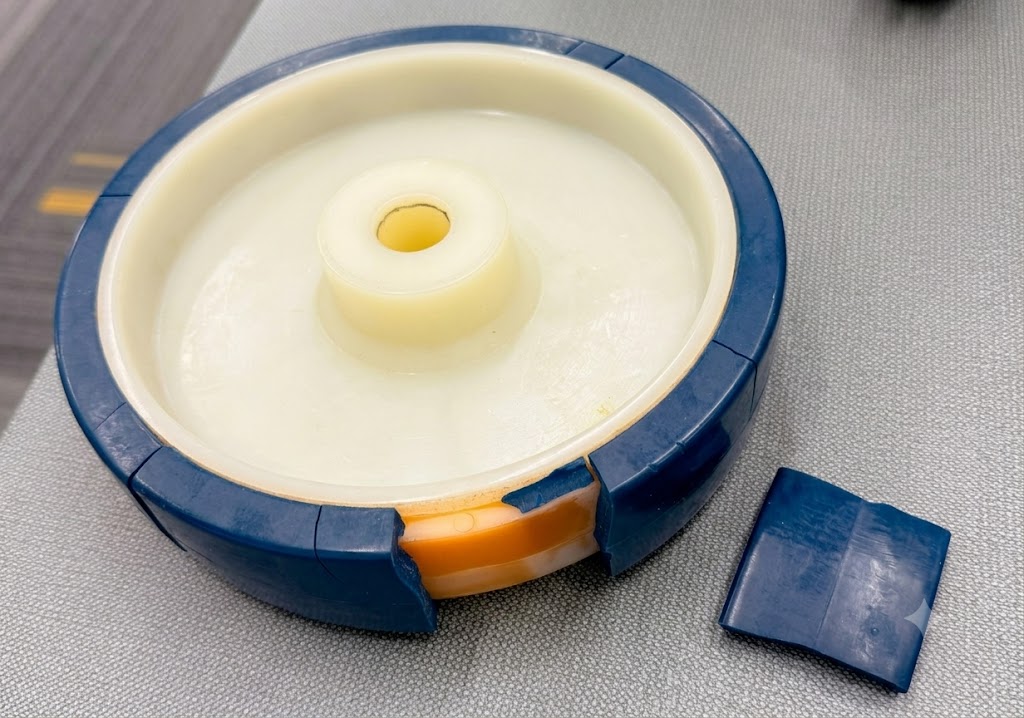
A New-Looking Wheel Can Still Be Aged
One common misunderstanding is that a wheel must be in good condition if it looks new.
In reality, wheel material can change during long-term storage. PU and rubber materials may become harder, more brittle, or less elastic over time.
The wheel may still look clean from the outside, but its resistance to load and impact may have already decreased. Once an aged wheel is installed on equipment and used under load, cracks may appear much faster than expected.
Real Case: A Wheel Cracked Soon After Use
A new customer once contacted us because the wheels they bought from another brand cracked after only a short period of use.
We checked the product they provided. The wheel did look quite new, but the tread surface already had many visible cracks. Under normal conditions, a newly used wheel should not develop so many cracks so quickly.
After discussing the application with the customer, we found that the problem was caused by more than one factor.
First, the customer had some overload during use. Second, the wheels had already been stored in the warehouse for two to three years before installation, so the material had started to age.
In other words, the wheel looked new, but the tread material was no longer in its best condition. When the aged material met overload, cracking became much easier.
Finally, the customer ordered a small batch of new wheels from us for replacement.
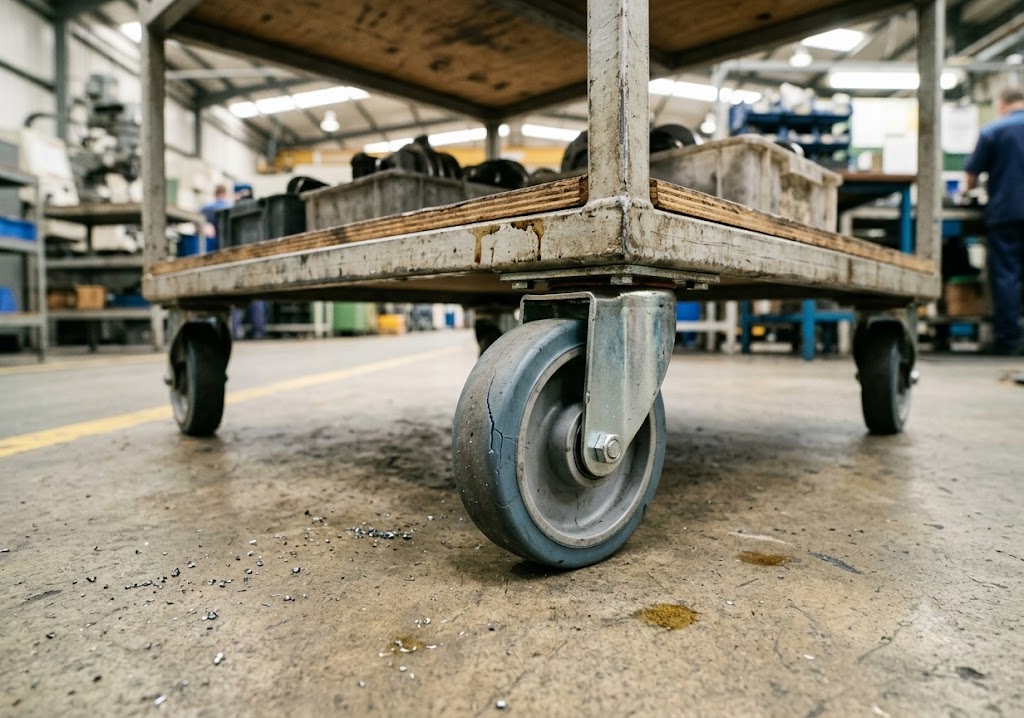
How to Reduce Cracking Risk
To reduce the risk of wheel cracking, the first step is to choose the right wheel material for the actual working condition.
If the equipment has a high load, the wheel should have stable load capacity. If the floor is rough or the equipment often receives impact, the wheel should have better tear resistance and impact resistance.
If the environment contains oil, cleaning agents, or chemicals, the wheel material should be compatible with those conditions.
Long-term overload should also be avoided. Spare PU wheels and rubber wheels should be kept in a cool, dry, and ventilated place, away from direct sunlight, moisture, high temperature, oil, and chemical substances.
Conclusion
Caster wheel cracking is not always caused by one single reason. It may come from overload, poor tread material, long storage time, natural aging, high temperature, chemicals, rough floors, or impact during use.
Once visible cracks appear on the wheel, the safest solution is to stop using it and replace it in time.
Choosing the right wheel material, avoiding overload, storing spare wheels properly, and checking wheel condition regularly can help reduce cracking risk and extend caster service life.
Need Help Choosing Replacement Wheels?
Tell EDL your wheel size, load requirement, working environment, and damaged wheel condition. Our team can help recommend a suitable replacement solution.