How Caster Offset Affects Performance
Caster Design Guide
How Caster Offset Affects Performance
Offset is a small dimension in caster design, but it has a direct influence on how easily a caster turns, how stable it feels, how much load it can carry, and how reliably a brake works.
Understanding offset helps explain why some swivel casters feel smooth and responsive, while others feel stiff, unstable, or difficult to control.
Rigid vs Swivel Casters
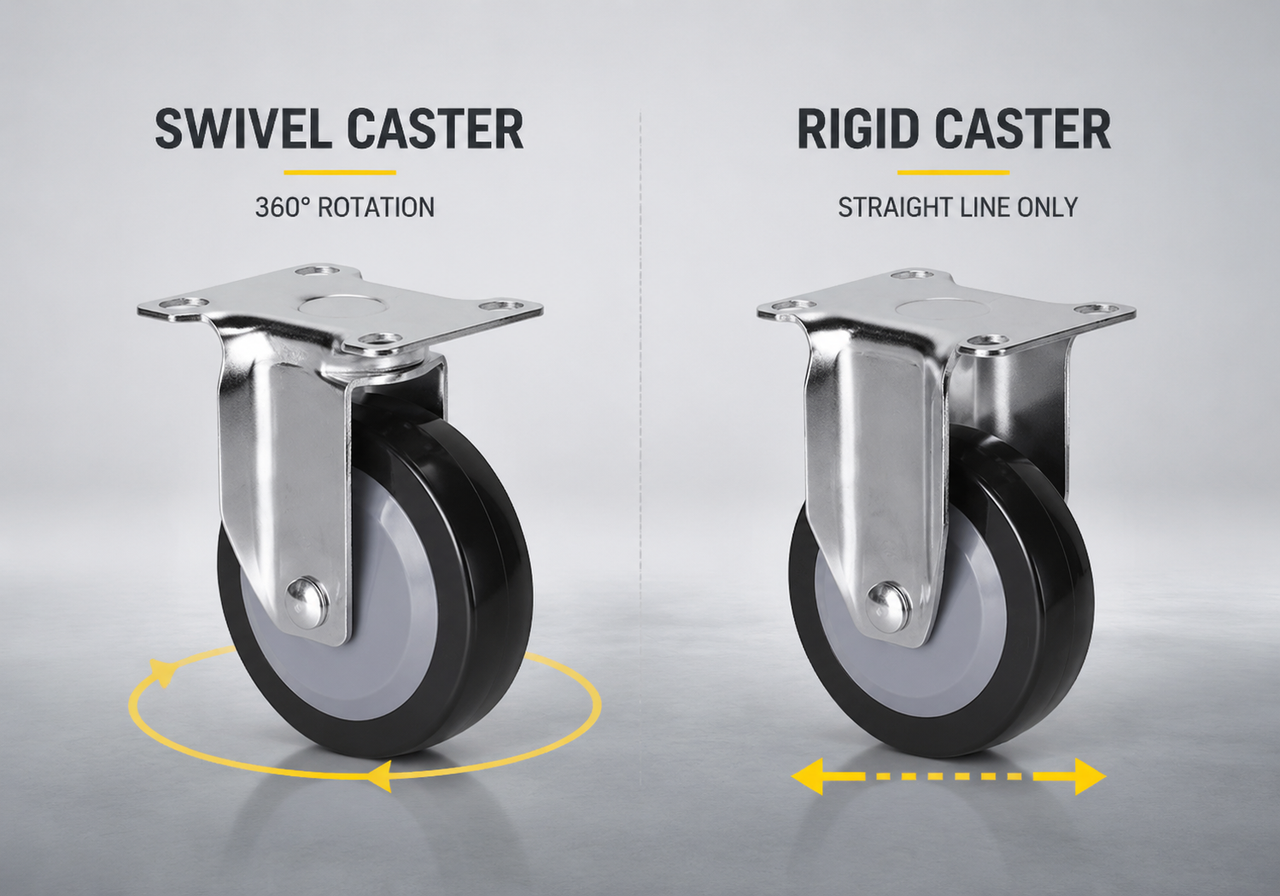
Many users know that rigid casters can only move in one direction, while swivel casters can rotate and change direction freely. However, the structural difference behind this behavior is often overlooked.
The key difference is offset.
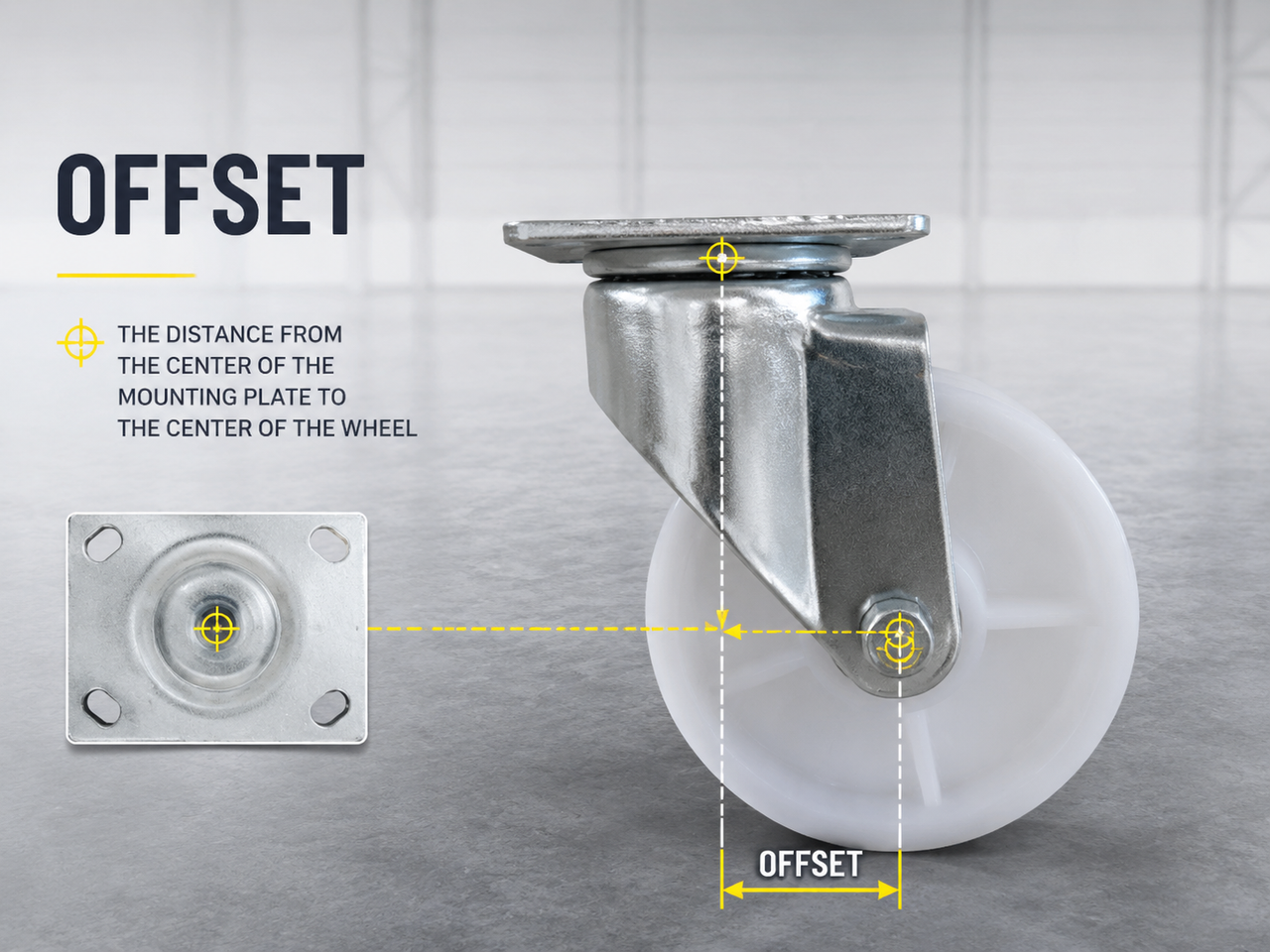
Offset is the perpendicular distance between the swivel centerline of the bracket and the centerline of the wheel. A rigid caster has an offset of zero because the wheel cannot rotate around a vertical axis. A swivel caster, on the other hand, positions the wheel behind the swivel centerline, creating an offset that allows the caster to turn.
Without offset, a swivel caster would not be able to align itself or steer effectively during movement.
How Offset Creates Self-Alignment
Most people have seen this happen before. After a trolley turns and starts moving forward again, the swivel casters often rotate by themselves and line up with the direction of travel.
This self-aligning behavior is created by offset.
When the cart moves forward, the contact force between the wheel and the ground creates a restoring moment around the swivel axis. This moment naturally pulls the wheel into the direction of travel, helping the caster return to a straight position.
The larger the offset, the stronger this self-aligning effect becomes. This is why swivel casters with a larger offset usually feel more responsive and easier to turn.

Larger Offset Is Not Always Better
A larger offset can make a caster easier to swivel and more flexible during directional changes. This is why many people assume that a larger offset is always better.
However, increasing offset also increases the leverage acting on the swivel section of the caster. More force is transferred to the bracket, kingpin, and swivel raceway, which can reduce structural strength and lower the caster’s load capacity.
In other words, offset is always a balance between maneuverability and strength. A caster that turns extremely easily may not be the best choice for heavy-duty applications.
What Is the Ideal Offset?
In most industrial caster designs, a reasonable offset is usually around one-third of the wheel diameter. This range helps balance steering flexibility and load capacity.
20%
Too Small
When offset is below about 20% of wheel diameter, steering may feel slow and less responsive.
1/3
Balanced Range
Around one-third of the wheel diameter usually provides a good balance between maneuverability and strength.
40%
Too Large
When offset exceeds about 40% of wheel diameter, load strength and structural stability may decrease.
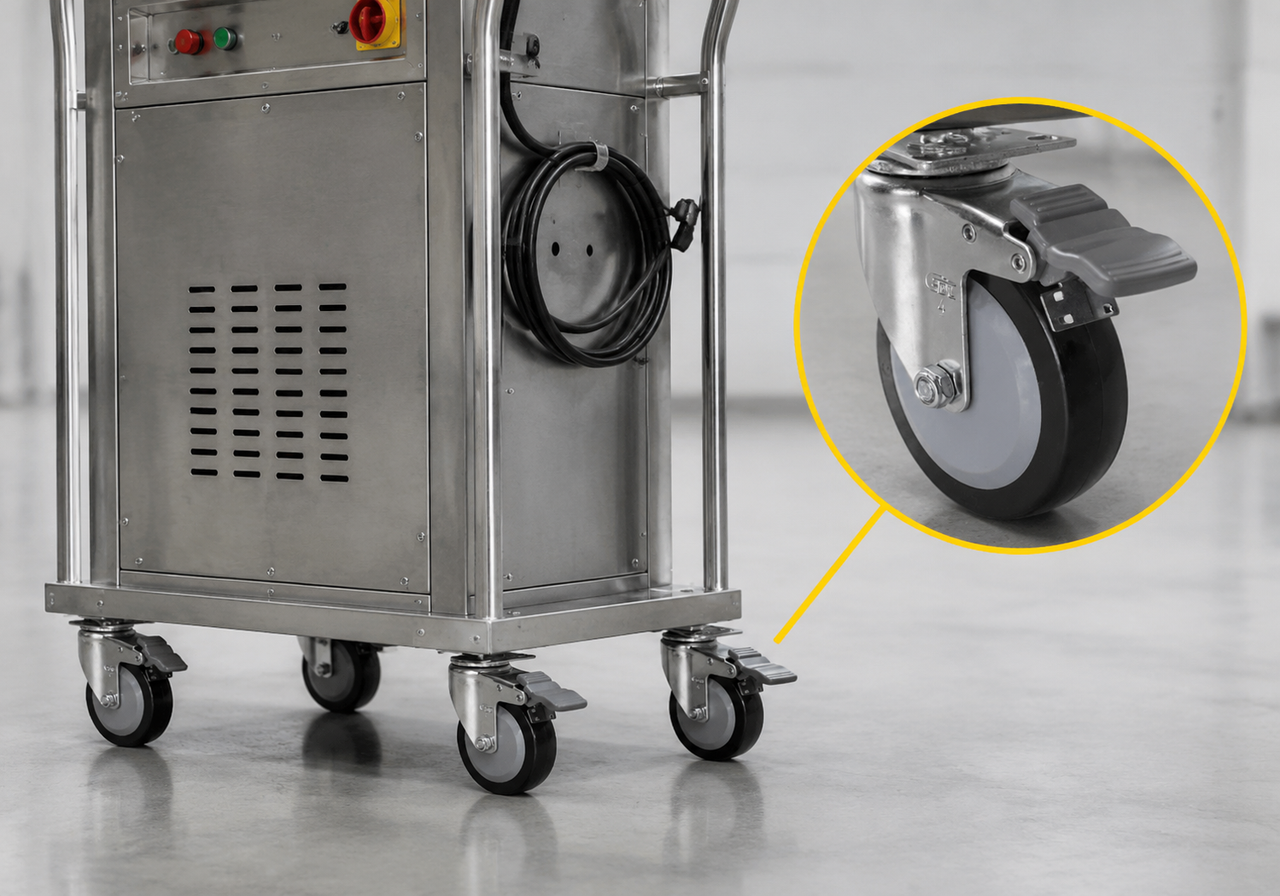
Offset and Brake Performance
Offset becomes even more important when a caster includes a wheel brake, foot brake, or total lock brake.
For brake casters, the design must not only allow smooth steering, but also ensure reliable locking. If the offset becomes too large, the braking force may shift away from the ideal contact position.
This can lead to brake pad slippage, incomplete wheel locking, reduced braking efficiency, and faster wear of braking components.
For this reason, brake casters usually require a carefully controlled offset. The design must balance turning flexibility, load capacity, and braking reliability at the same time.
Why Offset Matters
When people evaluate caster wheels, they often focus on wheel diameter, wheel material, and load capacity. These factors are important, but they are not the whole design.
Offset directly influences how easily a caster turns, how smoothly it tracks during movement, how much load it can carry, and how effectively its brake works.
A well-designed caster is not simply the result of using stronger materials. It is the result of balancing wheel size, bracket structure, swivel design, brake function, and offset correctly.
That is why offset remains one of the most important dimensions in caster design, even though most users never notice it.
Need Help Selecting the Right Caster?
Tell EDL your load requirement, wheel diameter, brake type, and application. Our team can recommend a caster solution with the right balance of maneuverability, strength, and braking performance.