Why Choosing the Right Caster Matters for Outdoor Applications
Outdoor Caster Guide
Why Choosing the Right Caster Matters for Outdoor Applications
For outdoor use, caster selection is not only about load capacity. Ground surface, noise requirements, water exposure, oil stains, and usage frequency can all affect caster life.
Choosing the right wheel material and bracket structure can help equipment move more smoothly and last longer in real outdoor conditions.
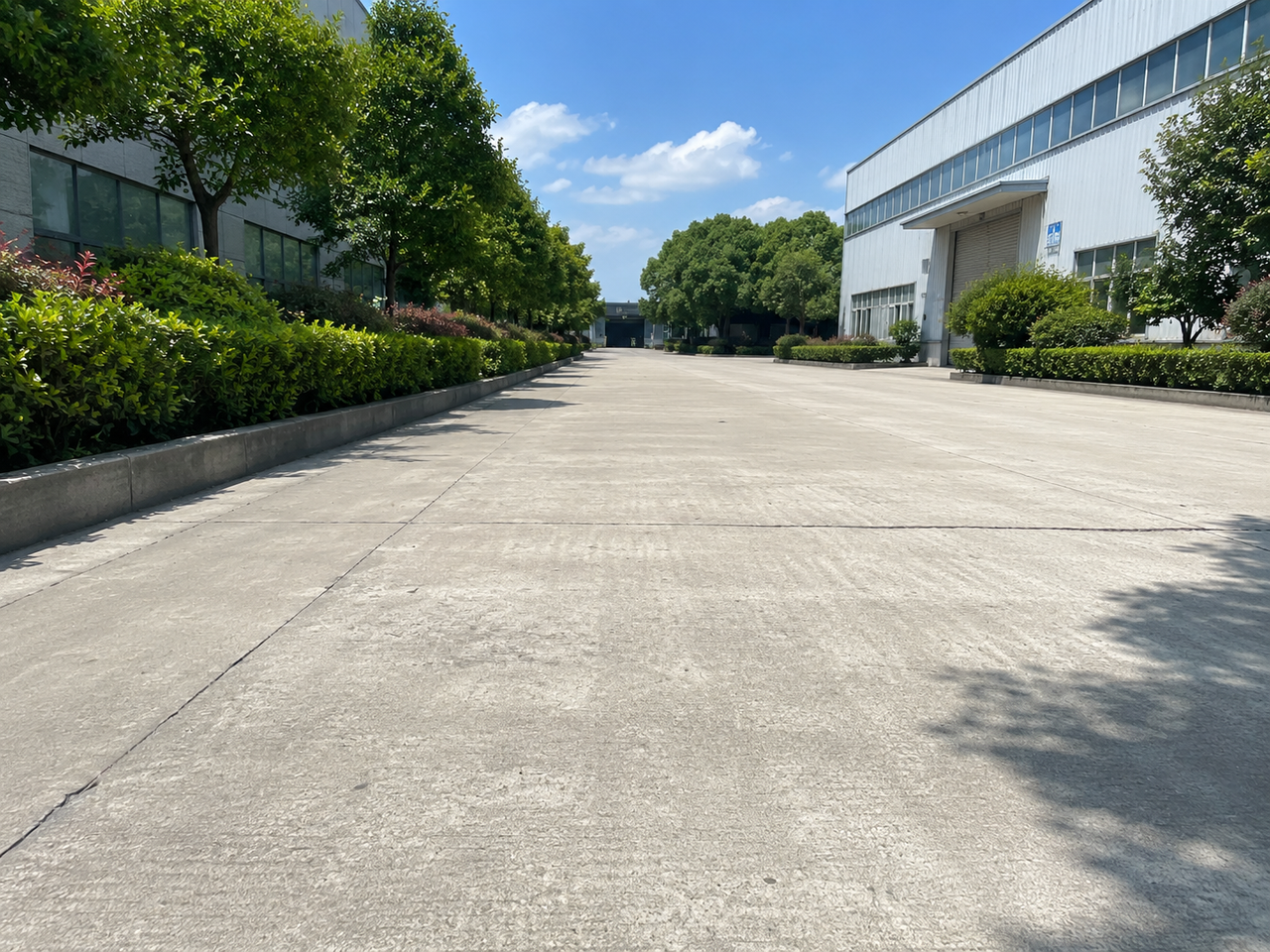
Outdoor Applications Need More Than Load Capacity
When many buyers choose caster wheels, they first look at load capacity, mounting type, and wheel size. These details are important, but they are not enough when the equipment needs to be used outdoors for a long time.
Compared with indoor use, outdoor environments usually involve rougher ground surfaces, higher usage frequency, rainwater, oil stains, dust, and other complex factors.
If the wheel material is not suitable, the caster may still meet the required load capacity, but it may wear quickly, become difficult to control, or cause the bracket to corrode earlier than expected.
For outdoor applications, service life depends not only on load capacity, but also on whether the wheel and bracket match the real working environment.
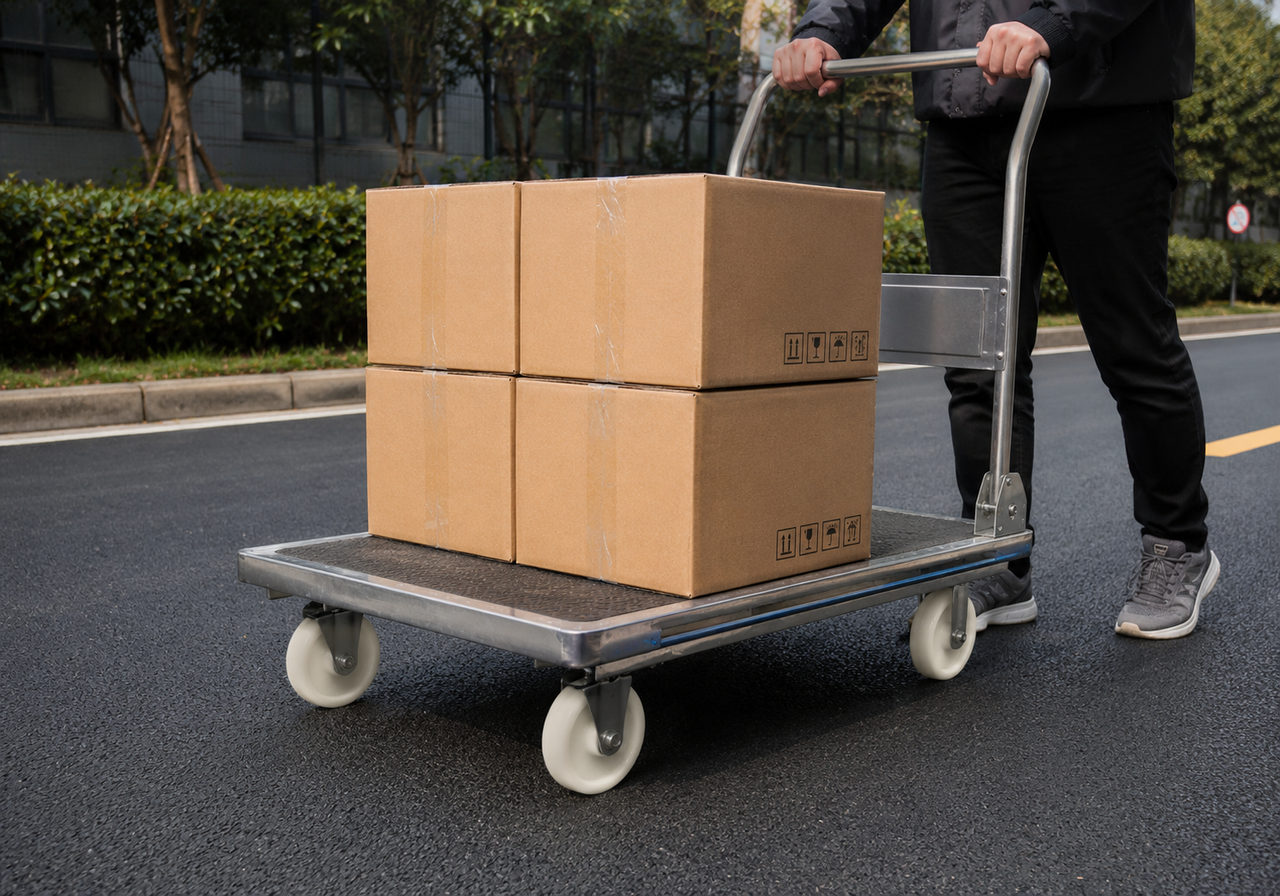
Why We Usually Recommend Nylon Casters First
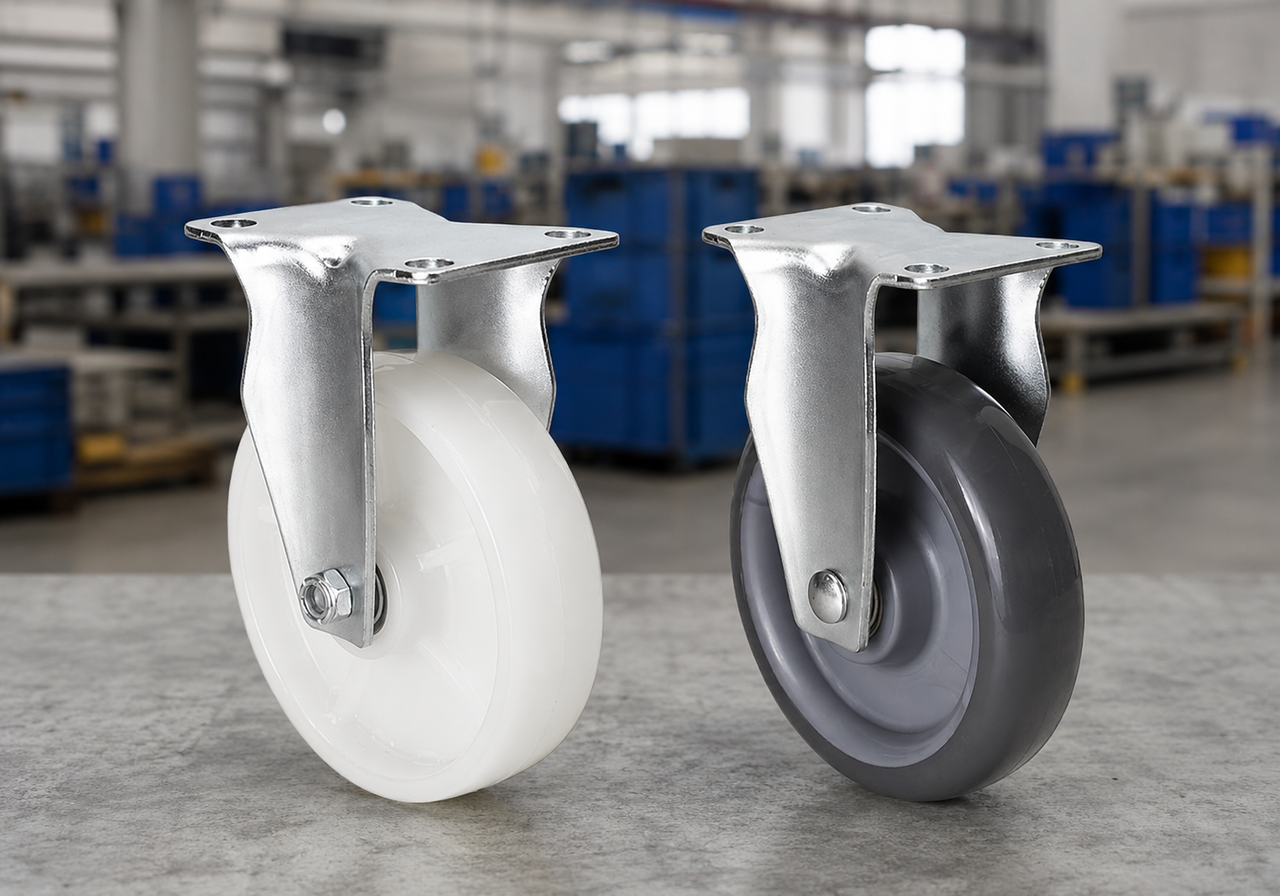
For most outdoor applications, EDL usually recommends nylon caster wheels first. The reason is not that nylon is the most expensive material, but that it provides a strong balance between wear resistance, load capacity, service life, and cost.
Concrete ground, asphalt roads, industrial park roads, warehouse outdoor areas, and exhibition hall surroundings can continuously wear the wheel tread during daily movement.
Compared with many common wheel materials, nylon offers better wear resistance, higher load capacity, and more stable dimensional performance. For high-frequency movement on rough outdoor ground, nylon wheels often provide longer service life while keeping the purchase cost relatively economical.
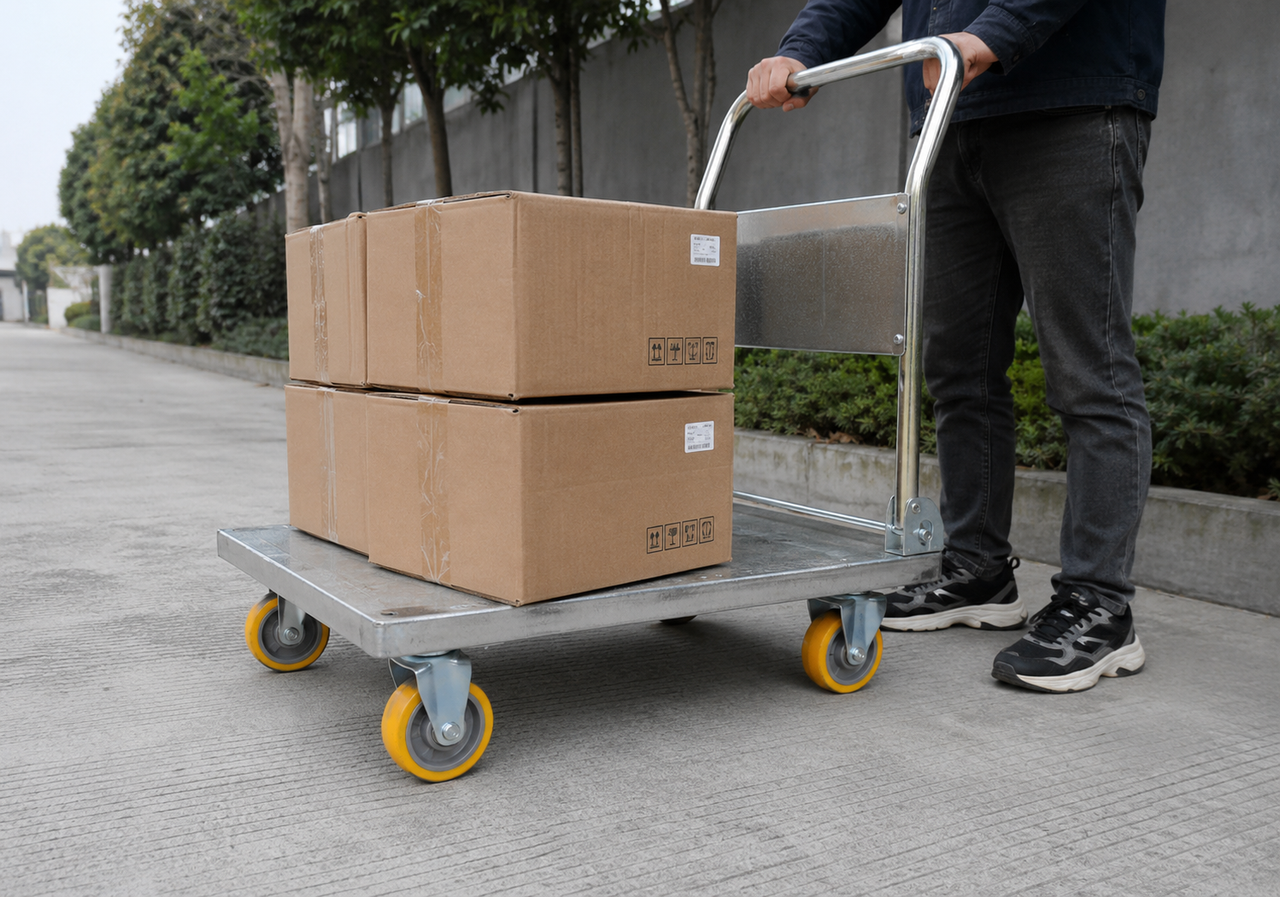
When Noise Matters, TPU Is a Better Choice
Of course, nylon is not always the best choice for every outdoor environment. In places such as commercial streets, hotels, hospitals, schools, and exhibition venues, rolling noise may also be an important concern.
In these cases, TPU caster wheels are often a better option. Compared with nylon, TPU can help reduce rolling noise while still maintaining good wear resistance.
Although TPU is usually not as wear-resistant as nylon in extremely abrasive environments, it offers a better balance between quiet movement and durability for many commercial outdoor applications.
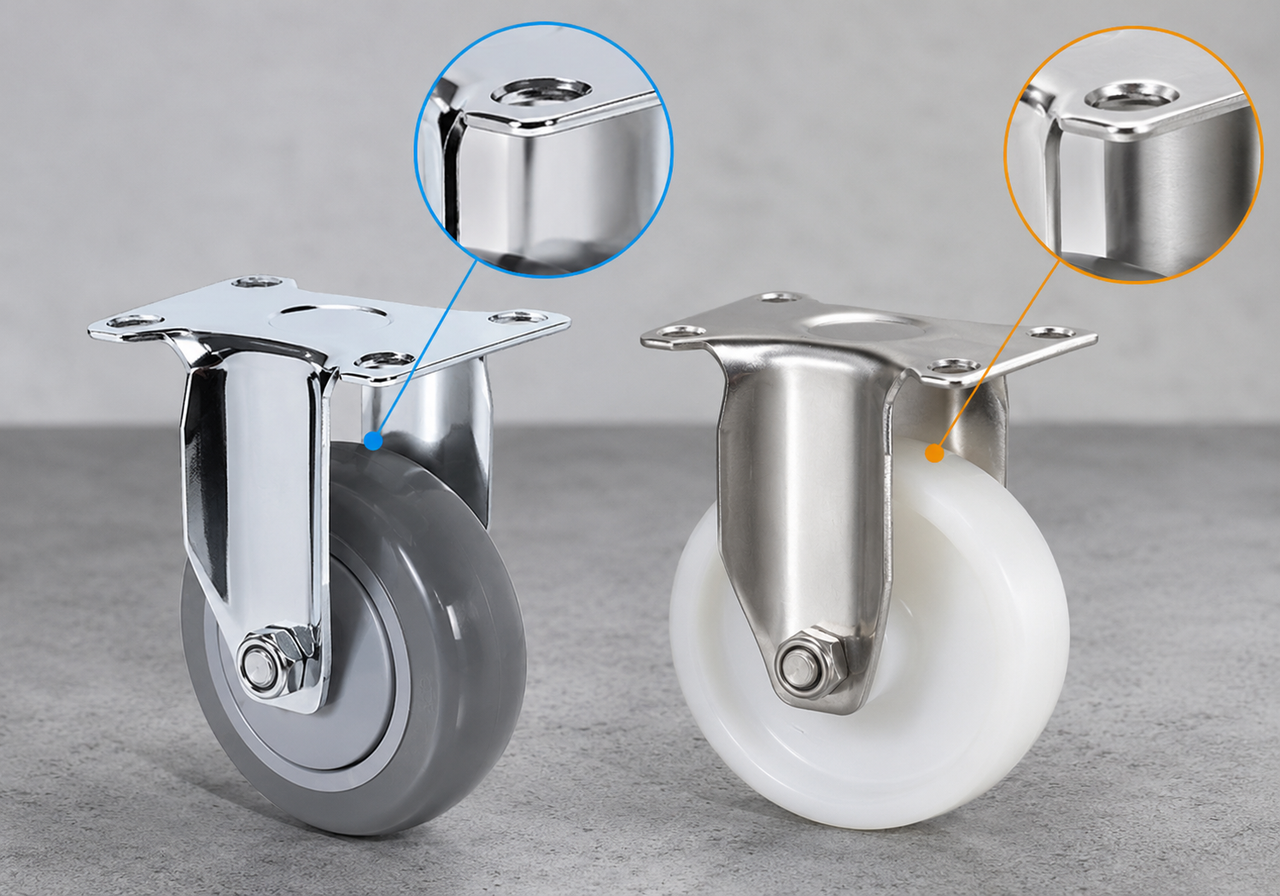
Do Not Ignore the Bracket for Outdoor Use
Many buyers focus carefully on the wheel material but overlook the bracket. In outdoor environments, the bracket can also affect the service life of the entire caster system.
If the equipment is frequently exposed to rainwater, humid air, oil stains, or cleaning agents, ordinary zinc-plated brackets may corrode more easily over time.
For general outdoor environments, chrome-plated brackets can usually provide better corrosion resistance and longer service life than ordinary zinc-plated brackets. For wet, oily, coastal, food processing, or more corrosive environments, 304 stainless steel brackets are often the better choice.
Combining nylon or TPU wheels with the right bracket can improve both wheel durability and the corrosion resistance of the complete caster system.
A Real Case from an Exhibition
At one exhibition, a booth construction worker came to our booth after finishing the setup. She was attracted by our caster products and started a conversation with us.
She told us that she often needed to move carts loaded with advertising materials around the exhibition venue. Her main problem was not load capacity. The wheels she had been using wore out quickly, and the cart also became easier to pull off direction after a period of use.
After understanding her working environment, we recommended EDL 50 Series nylon casters. Her main application was outdoor concrete ground, with long moving distance and high daily usage frequency. This was exactly the type of condition where nylon wheels are usually more suitable.
After receiving the products, she told us that the new wheels performed much better in wear resistance, moved more steadily, and no longer showed obvious direction problems. Later, she placed repeat orders and introduced our casters to several other people in the same field.
This case again shows that caster service life is not only decided by load capacity. It also depends on whether the wheel material truly matches the working environment.
How to Choose Casters for Outdoor Applications
For most outdoor applications, we recommend choosing the caster based on the ground condition, noise requirement, exposure to water or oil, and daily usage frequency.
✓
Rough Ground or Concrete
Choose nylon caster wheels first for better wear resistance and longer service life on rough surfaces.
✓
Noise-Sensitive Areas
Choose TPU caster wheels when quieter movement is needed while still keeping good durability.
✓
Water, Oil, or Humidity
Consider chrome-plated or 304 stainless steel brackets depending on the level of corrosion risk.
EDL Recommends Based on Real Working Conditions
Different outdoor environments require different caster solutions. At EDL, we do not recommend products only based on wheel diameter or load capacity.
We consider the ground surface, movement frequency, environmental humidity, noise requirement, and the customer’s actual application before recommending the right wheel material and bracket combination.
For most outdoor applications, nylon is often our first recommendation because of its wear resistance and cost advantage. If quieter movement is required, TPU may be a better solution. If water, oil, or humidity is common, chrome-plated or stainless steel brackets can help extend the service life of the entire caster system.
Conclusion
There is no single caster material that works best for every outdoor environment. The right choice depends on the real working condition.
For most outdoor use, nylon casters are often recommended for better wear resistance, longer service life, and a more economical cost. If noise reduction is important, TPU casters are a good alternative. If the caster is frequently exposed to rainwater, oil stains, or humid conditions, chrome-plated or 304 stainless steel brackets should also be considered.
This is also how EDL recommends caster products: we first understand the customer’s application, then recommend the wheel and bracket combination that truly fits the working environment.
Need Help Choosing Outdoor Casters?
Contact EDL and tell us your ground surface, load requirement, usage frequency, and outdoor environment. Our team can recommend a suitable caster solution for your equipment.