Caster Mounting Options Guide: Measure for Perfect Replacement
The Ultimate Replacement Caster Guide: Measure Bolt Patterns, Plate Sizes & Stem Threads to Get It Right the First Time
A caster breaks on your favorite workshop cart. You think it will be a simple fix. But when the new caster arrives, the bolt holes don't line up. Or the stem won't screw in. This common problem turns a quick task into a frustrating waste of time and money.
.png)
This caster mounting options guide will prevent that. We will show you exactly what to measure. This includes the bolt hole pattern and top plate size. We'll also cover the threaded stem details. This helps you get the perfect replacement caster on the first try. We'll focus on the key details that ensure a successful retrofit or replacement.
Key Takeaways
The two main caster types are top plate and threaded stem. Finding which you have is the first step.
For top plate casters, the bolt hole pattern is most important. Measure it center-to-center. This matters more than the overall top plate size.
For threaded stem casters, you must know if the thread is metric vs imperial. They are not the same, even if they look similar.
Common sizes like 1/2" and M12 are very close in width. The same goes for 5/8" and M16. But they have different threads and cannot be swapped.
Using this guide's measurement checklist before you buy is the best way to guarantee your replacement caster will fit.
The First Choice: Top Plate vs. Threaded Stem
Your first step is to identify your caster's mounting type. Nearly all casters fall into two groups. This choice between top plate vs threaded stem casters will guide the rest of your replacement process.
Top Plate CastersThese casters attach to a flat surface using a square or rectangular metal plate. Four bolts or screws go through holes in the plate. This secures it to the bottom of a cart, workbench, or piece of equipment.
Pros: Great for heavy loads because they spread weight over a larger area. Very stable and secure.
Cons: They need a flat, large enough surface for mounting.
Threaded Stem CastersThese casters have a threaded bolt (the stem) that screws directly into a matching threaded hole. You often find them on office chairs, furniture, and equipment with tubular legs where a plate won't fit.
Pros: Perfect for tight spaces and mounting into legs or tubes. Often easy to install and replace.
Cons: Usually used for lighter to medium loads compared to plate casters.
.png) The Plate Caster Deep Dive: A Measurement Guide
The Plate Caster Deep Dive: A Measurement Guide
If you have a top plate caster, getting the measurements right is simple but crucial. Follow these steps to ensure your replacement caster is a perfect match for a retrofit.
Step 1: Measure the Top Plate Size
First, measure the overall dimensions of the top plate. Use a tape measure or ruler to get the length and width of the flat metal plate.
This top plate size is good information to have. But it is the least important measurement. As long as the plate isn't so large that it hangs off the edge of your equipment, a small difference in size is usually okay. The bolt holes are what truly matter.
Step 2: The Critical Bolt Hole Pattern
The bolt hole pattern is the distance between the mounting holes. This measurement cannot be wrong for a direct replacement caster. If this is wrong, the caster will not fit.
You must measure from the center of one hole to the center of the next. Do not measure from the inside or outside edges of the holes.
First, measure the distance from the center of one hole to the center of the hole next to it, lengthwise.
Next, measure the distance from the center of one hole to the center of the hole next to it, widthwise.
Write these two numbers down. This is your bolt hole pattern (for example, 1-3/4" x 2-7/8"). This is the number you will use to find a perfect replacement caster.
.png)
Step 3: Check Axle and Mounting Bolt Size
Finally, look at the bolts themselves. The holes on the new caster's plate must be large enough for your existing mounting bolts. If you are buying new bolts, make sure they match the holes on the caster.
Also, note the axle bolt size. This is the bolt that holds the wheel inside the caster's metal frame (the fork). This is more important for replacing just the wheel. But it's good information to have when looking at the overall hardware for your caster mounting options guide.
The Threaded Stem Problem: Metric vs. Imperial
From first-hand experience, we see users try to force an imperial threaded stem into a metric socket. Or they do the opposite. They look almost the same. But forcing them will strip the threads and can ruin both the new caster and your equipment.
Finding Your Stem: Metric or Imperial?
Before you buy, you must know which system your equipment uses. Here are a few ways to find out:
Check for Markings: Look for any numbers or letters stamped on the old caster's stem or on the equipment itself. "M12" means a 12mm metric thread. A fraction like "1/2" means an imperial thread.
Use a Thread Gauge: This is the most accurate tool for finding thread size and pitch.
The Nut Test: If you have a set of nuts of known sizes, you can do a simple test. Carefully try to thread a known metric nut (like an M12) onto the stem. If it spins on smoothly, you have a metric stem. If it binds after a turn, try an imperial nut (like a 1/2").
How to Measure a Threaded Stem
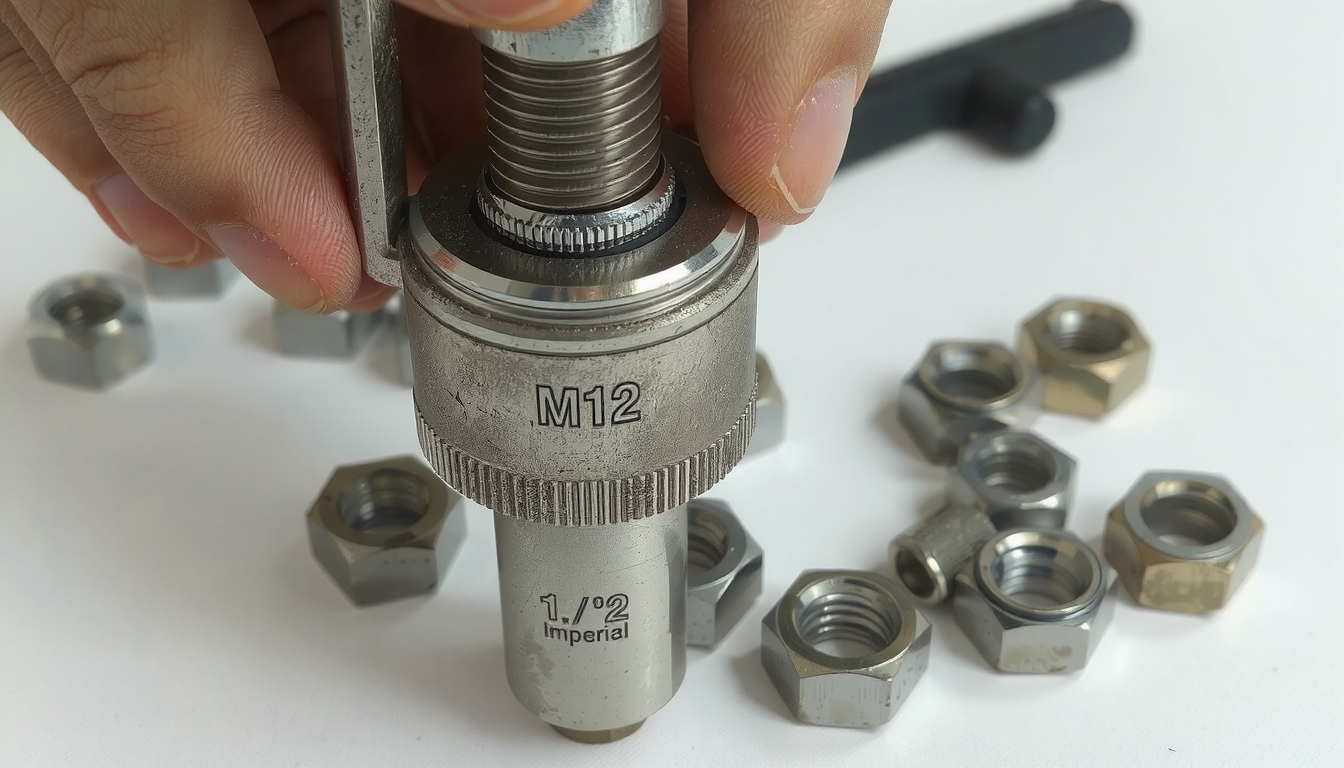
If you can't identify the markings, you'll need to measure the threaded stem.
Diameter: Use calipers for the most accurate measurement of the outside diameter of the threads. A simple ruler can also give you a close estimate.
Thread Pitch: This is the distance between threads. For metric stems, it's measured in millimeters (e.g., 1.75mm pitch). For imperial, it's the number of threads per inch or TPI (e.g., 13 TPI). This is hard to measure without a gauge. So focus on getting the diameter and system (metric vs imperial) correct first.
Common Sizes and Their Uses
The most confusing part of the metric vs imperial issue is how close some sizes are. An M12 stem is not the same as a 1/2" stem. An M16 stem is not a 5/8" stem. This table shows common sizes and why they are not the same.
| Common Imperial Size | Approx. Metric Equivalent | Common Applications |
|---|---|---|
| 3/8"-16 | ~9.5mm (Often confused with M10) | Light furniture, office chairs, display racks |
| 1/2"-13 | ~12.7mm (Very close to M12) | Workbenches, medium-duty carts, equipment stands |
| 5/8"-11 | ~15.9mm (Very close to M16) | Heavy-duty carts, industrial equipment |
As you can see, a 1/2" stem is 12.7mm wide. An M12 stem is 12mm wide. This tiny difference is enough to prevent them from working together properly. The same applies to the heavier-duty M16 and 5/8" sizes. Always match the system.
The Ultimate Retrofit & Replacement Checklist
Use this checklist before you buy. It will guide you through every step and ensure you have all the information needed for a successful replacement caster purchase.
Identify Caster Type: Is it a Top Plate or a Stem Mount?
For Top Plate Casters:
[ ] Measure Bolt Hole Pattern (Center-to-Center): ____" x ____"
[ ] Measure Overall Top Plate Size: ____" x ____"
[ ] Measure Mounting Bolt Diameter: ____" or M____
For Threaded Stem Casters:
[ ] Determine Thread System: Imperial (inches) or Metric (mm)?
[ ] Measure Stem Diameter: ____" or M____
[ ] (If possible) Determine Thread Pitch: ____ TPI or ____mm
Universal Checks:
[ ] Measure Wheel Diameter: ____"
[ ] Note Wheel Material (e.g., polyurethane, rubber, steel).
[ ] Check Weight Capacity (if known).
FAQ: Your Caster Mounting Questions Answered
How do I measure a caster bolt hole pattern correctly?
Always measure from the center of one hole to the center of the next hole. Do this for both length and width. Do not measure from the edges of the holes or the overall plate dimensions. The bolt hole pattern is the most critical measurement for a direct fit.
What's the real difference between an M12 and an M16 threaded stem?
The main difference is diameter. An M12 stem has a nominal diameter of 12mm. An M16 has a nominal diameter of 16mm. They are not the same. An M16 is much thicker and stronger. It's used for heavier applications than an M12.
Can I use imperial bolts on a metric top plate?
It is strongly discouraged. A 1/2" bolt (12.7mm) might seem to fit in a 13mm hole. But the slight difference can cause loosening over time due to vibration. It's always best to match the fastener system (imperial/metric) to the caster plate for a secure and safe installation.
My replacement caster's top plate is slightly different, but the bolt holes match. Can I still use it?
Yes. Provided the bolt hole pattern matches exactly, a very slightly different overall top plate size is generally acceptable. Being the single most important dimension, the bolt hole pattern will ensure a successful retrofit or replacement.
What is the easiest way to find a replacement for a caster with no markings?
Follow the measurement checklist in this guide carefully. Clear photographs of the caster from various angles will also help. Carry your measurements (particularly the bolt hole pattern or stem diameter) to a specialty supplier. These specifics are a lot more important than any brand name or part number.
{ "@context": "https://schema.org", "@graph": [ { "@type": "FAQPage", "mainEntity": [ { "@type": "Question", "name": "How do I measure a caster bolt hole pattern correctly?", "acceptedAnswer": { "@type": "Answer", "text": "Always measure from the center of one hole to the center of the adjacent hole, for both length and width. Do not measure from the edges of the holes or the overall plate dimensions, as the bolt hole pattern is the most critical measurement for a direct fit." } }, { "@type": "Question", "name": "What's the real difference between an M12 and an M16 threaded stem?", "acceptedAnswer": { "@type": "Answer", "text": "The primary difference is diameter. An M12 stem has a nominal diameter of 12mm, while an M16 has a nominal diameter of 16mm. They are not interchangeable. An M16 is significantly thicker and stronger, used for heavier applications than an M12." } }, { "@type": "Question", "name": "Can I use imperial bolts on a metric top plate?", "acceptedAnswer": { "@type": "Answer", "text": "It is strongly discouraged. While a 1/2" bolt (12.7mm) might seem to fit in a 13mm hole, the slight difference can cause loosening over time due to vibration. It's always best to match the fastener system (imperial/metric) to the caster plate for a secure and safe installation." } }, { "@type": "Question", "name": "My replacement caster's top plate is slightly different, but the bolt holes match. Can I still use it?", "acceptedAnswer": { "@type": "Answer", "text": "Yes. Provided the bolt hole pattern matches exactly, a very slightly different overall top plate size is generally acceptable. Being the single most important dimension, the bolt hole pattern will ensure a successful retrofit or replacement." } }, { "@type": "Question", "name": "What is the easiest way to find a replacement for a caster with no markings?", "acceptedAnswer": { "@type": "Answer", "text": "Follow the measurement checklist in this guide carefully. Clear photographs of the caster from various angles will also help. Carry your measurements (particularly the bolt hole pattern or stem diameter) to a specialty supplier. These specifics are a lot more important than any brand name or part number." } } ] }, { "@type": "Person", "name": "" } ] }